Report of the First Urban Thinkers Campus on the United Nations Website

Selected Portfolio Works

Palace Hotel Kish Visual Identity
[post_terms limit="2"]
Palace Hotel Kish Visual Identity
[post_description]
[post_description]
PKS Visual Identity
[post_terms limit="2"]
PKS Visual Identity
[post_description]
[post_description]
Brand Development of Kimia Exir Shargh Holding
[post_terms limit="2"]
Brand Development of Kimia Exir Shargh Holding
[post_description]
[post_description]
Yamal of Basaeidu
[post_terms limit="2"]
Yamal of Basaeidu
[post_description]
[post_description]


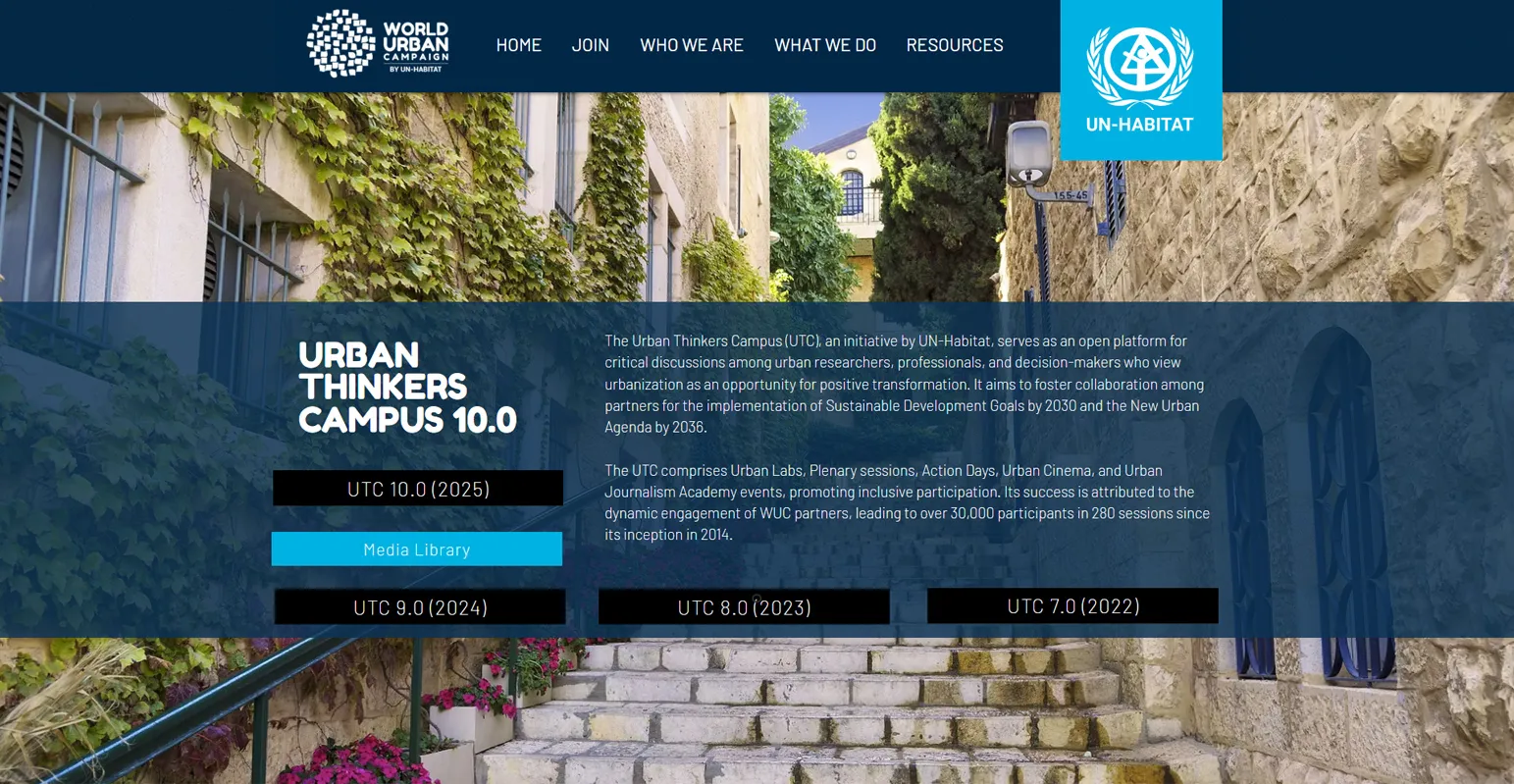
The report of the 31st social co-creation event of Mammute Urban Innovation Studio in Qeshm—implemented as Iran’s first Urban Thinkers Campus (UTC)—has been published by the UN-Habitat World Urban Campaign.

UTC is an interactive platform for urban practitioners, researchers, and professionals to share experiences and knowledge through collaboration and learning. Our social participation event on Qeshm Island was designed based on the UTC framework. We are proud to have developed an innovative process aligned with SDGs 5, 8, and 11.3, as well as the action areas of “The City We Need” report, including economic opportunities for all, local governance, and learning and innovation.

Main Results of Our First UTC in Qeshm Island:

We hosted eight interactive workshops on business models, tourism, digital marketing, professional pitching, smart cities, and communication skills using gamified methods for 80 local participants (SDG 4: empowering communities for business and innovation).

We formed a group of 80 local creative practitioners in fields such as handicrafts, architecture, photography, tour guiding, painting, poetry, and local cuisine (SDGs 5, 10 – social inclusion).

We developed business plans for 21 local teams to support local economic development (SDG 8).

We built a network of 80 local creative human resources to strengthen coordination and collaboration (SDG 11).

We used an interactive mapping system to identify the local asset network, including places, people, natural attractions, and social capacities, ensuring policy coherence.
lick the button below to request a consultation and connect with our experts today

.Click the button below to request our services and receive expert consultation

In addition, we anticipate that this program will lead to an action plan that strengthens public participation models in future urban development. It also increases citizens’ willingness to engage in local co-design processes. These findings provide a practical overview for improving participation rates in future cities, a principle emphasized across sustainable development frameworks for inclusive human settlements.

Overall, our event demonstrated that the UTC framework can effectively foster innovation, collaboration, and social inclusion. We hope our experience inspires other cities to adopt this framework and promote sustainable development and inclusive growth within their communities.

View the “Mammut First Urban Thinkers Campus Report” on the United Nations website:

Report 7, Case 18 (UTC #18: The Social Co-creation Event to Enhance Participation)

View “Qeshm Co-creation” on Mammute Accelerator website
SAME
ARTICLES

Related Articles

Articles

Mammute Consulting & Accelerator Center draws on more than 20 years of experience in design, innovation, business development, and branding to support startups and emerging businesses from problem discovery and ideation to business model development, brand building, investment, and market entry.Innovative businesses and creative industries are among the key drivers of innovation in the economy and society. Their ideas become truly valuable when they address real-world challenges and transform them into viable, scalable, and value-creating solutions.

Articles

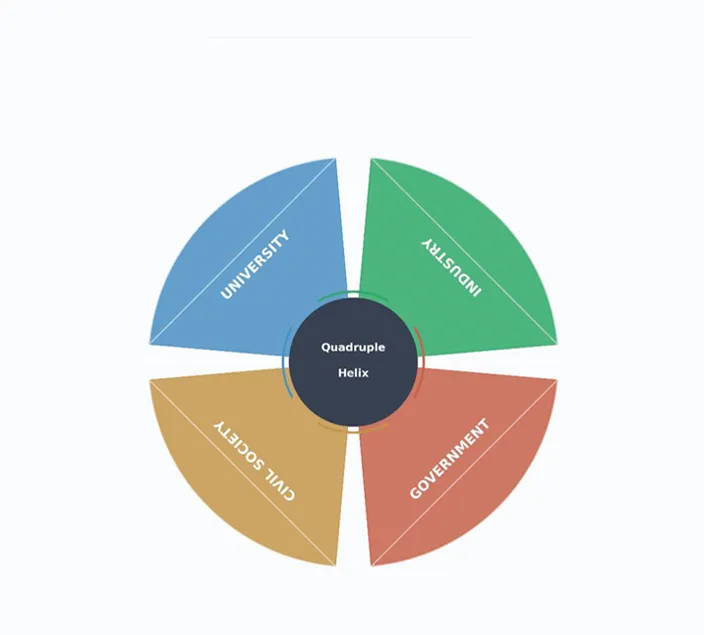
This article has been authored by members of the Mammute Urban Innovation Studio (MUIS), the Urban Innovation Department of the Mammute Consulting and Accelerator Center, as part of the studio's ongoing commitment to advancing interdisciplinary research in regional innovation, science and technology policy, entrepreneurship, and sustainable development.Published in the international journal Area Development and Policy, the study presents a comprehensive framework for integrating Science, Technology and Innovation (STI) policies with regional cultural, social, and economic capacities. Using North Khorasan Province, Iran, as a case study, the research demonstrates how sustainable regional development can be achieved by fostering meaningful collaboration among universities, industries, governments, and local communities, rather than relying solely on technological investment.

News

After a very difficult year of conflict, economic pressure, and uncertainty in Iran, local communities need hope, visibility, and spaces of life more than ever. For this reason, we are organizing Let Ramin Speak First, a voluntary 5-day community placemaking lab in Ramin, the origin of surfing in Iran, before bringing its story to Placemaking Week Europe 2026 in Wrocław.From 25 to 29 August, we will work with the local library, surfing club, youth, women, and activists on beach cleaning, improving and painting the surfboard container, providing useful facilities for the library and surfing club, documenting local stories, and preparing Ramin’s own message for Wrocław.

Articles

Many executives mistakenly associate digital transformation with purchasing new software or automating a handful of operational processes. In reality, 360-Degree Digital Transformation is a strategic, enterprise-wide approach that digitally integrates every dimension of an organization—from marketing and customer engagement to internal operations, supply chain management, finance, and human resources.Within this model, technology is not introduced as an external add-on or temporary fix. Instead, it becomes embedded within the very DNA of the business.
To stay informed about our latest articles and publications, please complete the form below.