



Mardom-Shahr Platform: An Innovative Model of Iranian Development
At the first Iran National Social Innovation Award (JANA), the “Mardom-Shahr Participatory Platform” developed by the Urban Innovation Studio of the Mammute Accelerator was selected as a top-ranked winner in the “Hope and Present” category and received the JANA trophy.
The Mardom-Shahr Participatory Platform focuses on leveraging local assets and capacities to identify and solve urban and social challenges. It redefines the local community not only as narrators of their lived environment’s issues, but also as “solution designers” who actively participate in decision-making alongside experts, managers, and public institutions.
By mobilizing social capital and increasing civic participation through local teams and co-creation events, the platform enables collective action toward targeted solutions based on social, economic, cultural, and natural assets.
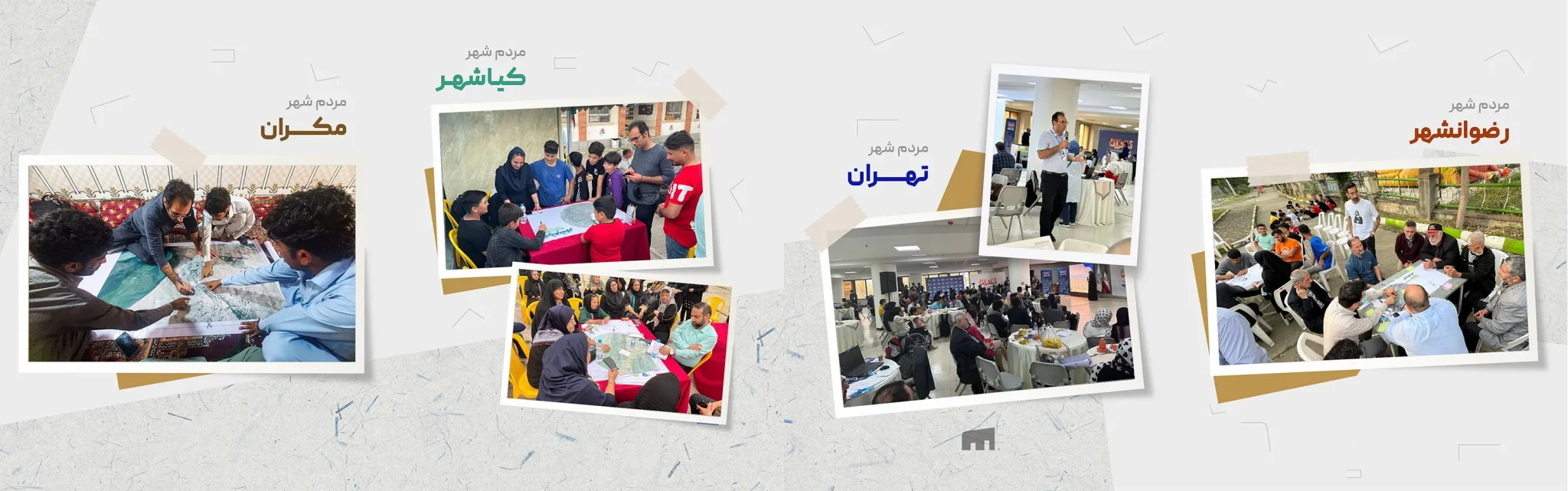
The Urban Innovation Studio of the Mammute Accelerator (MUIS) is proud to have implemented the Mardom-Shahr model in the cities of Kiashahr and Rezvanshahr in Gilan Province, Malayer in Hamadan Province, Mashhad in Razavi Khorasan Province, and in seven cities across the Makoran coastal region—Minab, Chabahar, Sirik, Zarabad, Dashtyari, Konarak, and Jask—contributing to the development of an innovative social ecosystem through active community participation.
What is JANA?
The Social Innovation Award, known as JANA, is a national program designed to highlight and model innovative initiatives and projects implemented to address social challenges and strengthen Iran’s social innovation ecosystem. JANA focuses on executed and impactful projects—not just ideas—and aims to amplify inspiring experiences, introduce social innovators and changemakers, and raise public awareness while attracting policymakers and stakeholders to the potential of social innovation. The program also supports the formation of problem-driven, responsive institutions across the country..
Introducing the Mardom-Shahr Platform
Mardom-Shahr is a project designed to restore the role of citizens in shaping their neighborhoods—not as passive service recipients, but as active agents in building the future of their city.
Based on a neighborhood-driven development approach, the initiative seeks to strengthen resident participation in both decision-making and implementation processes. In this model, the neighborhood is not merely a geographic area, but a living space of human relationships, social resources, and opportunities for change.
Through field engagement, dialogue sessions, participatory workshops, and collaboration with local groups, the Mardom-Shahr team identifies priority challenges in each neighborhood. Together with residents, they design and implement creative solutions.
From participatory urban planning to small-scale social projects, from neighborhood signage to cultural programs for children, every intervention is centered on empowering people and activating local capacities.
The Mardom-Shahr initiative aims to create a lasting shift in how citizens perceive urban life: the neighborhood is their second home, and just as municipalities and governments have responsibilities, so do the residents themselves.
This perspective distinguishes Mardom-Shahr from purely service-based or occasional interventions and turns it into a scalable model for urban social development.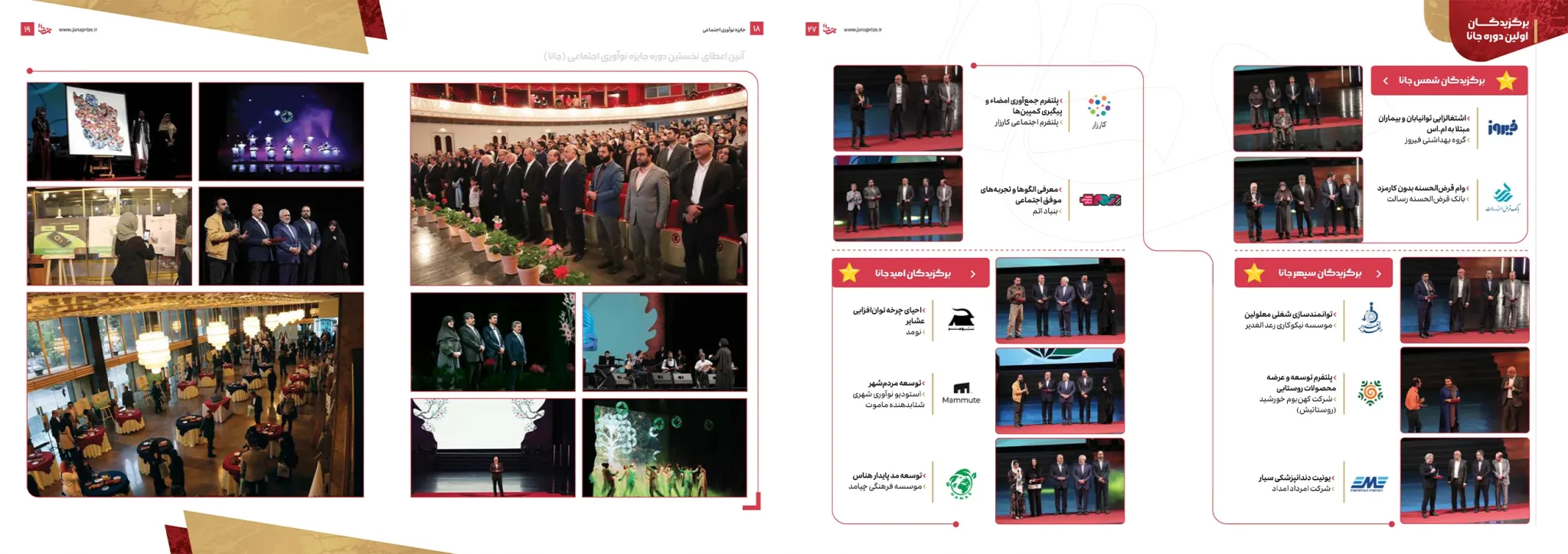
Key Innovations
- Defining a localized model of social development at the neighborhood scale
- Establishing participatory local institutions and leveraging residents’ capacity for problem identification and solving
- Designing the “People-City Neighborhood Development Office” as an intermediary structure between citizens and official institutions
- Implementing projects based on collective action, social capital, and skills development
- Documenting experiences and developing a replicable model for other urban neighborhoods
Origins and Evolution of the Idea
The Mardom-Shahr idea emerged from the personal experiences and deep concerns of Navid Falahat and his colleagues regarding the growing alienation of people from their cities.
When cities become places people only pass through rather than live in, opportunities for participation and belonging disappear.
Navid Falahat, who has years of experience in facilitation and urban planning, realized that building a livable and sustainable city must begin at the neighborhood level—where people still talk to each other, share problems, and hold hope for change.
Inspired by global experiences in local development, the People-City concept took shape—not as a copy, but as a context-sensitive model adapted to Iran’s social and cultural realities.
Instead of top-down interventions, the initiative began with dialogue, participatory design, and small but meaningful projects. Today, Mardom-Shahr represents a journey from local streets and squares toward broader horizons—from building benches and painting walls to restoring a sense of citizenship.
The project demonstrates that cities must be built with people—people who, when seen and engaged, can create transformation.
View the “Mardom-Shahr” project on the official JANA website