- Startup development process at Mammute Accelerator


Local Challenges, Indigenous Capacities
Mardom-Shahr is a participatory platform that leverages local capacities and an asset-based approach to identify urban and rural challenges and develop context-driven solutions. Through this process, local communities not only voice their concerns but also play a key role in designing and implementing solutions.
What is the Mardom-Shahr Platform
Urban spaces are not merely functional environments; they serve as catalysts for social and economic interactions. While residential and commercial development projects dominate many cities today, innovative approaches can optimize land use, redefine urban functions, and create added value for local stakeholders.
Mardom-Shahr is an innovative process that identifies and analyzes local challenges by leveraging the social, cultural, economic, and natural assets of each region. Through the development of context-specific solutions, the platform creates a pathway toward sustainable and participatory development.
The Mammute Urban Innovation Studio (MUIS) uses the Mardom-Shahr participatory platform to uncover urban and rural challenges and harness local capacities to develop collaborative, place-based solutions. By building on the social, cultural, economic, and natural strengths of local communities, the platform aims to enhance social and cultural participation.
Mardom-Shahr maps cultural resources and local assets, providing sustainable solutions tailored to the unique characteristics of each region. It also supports the advancement of urban innovation and development initiatives by aligning strategies with the needs, perspectives, and aspirations of local communities.
Mardom-e Shahr Objectives

The Mardom-Shahr process begins with a collaborative and participatory approach that brings together diverse stakeholder groups to identify local challenges and uncover community assets. Through interactive methods such as Local Issue Mapping and Creative Circle workshops, participants collectively analyze the area’s needs, opportunities, and existing strengths.
The insights generated through this process are documented as cultural maps and comprehensive records of local issues and challenges. These findings provide the foundation for designing and implementing practical, community-driven initiatives based on locally informed solutions. Each project is developed to address local priorities while fostering stronger civic engagement, cross-sector collaboration, and partnerships with relevant organizations and public institutions.
Individuals and families
Neighborhood and village community groups
Youth and active community members
Urban designers and planners
Environmental and sustainability specialists
Social and cultural development experts
Government, academic, and research institutions
Municipalities and urban management authorities
Public sector organizations involved in urban development
NGOs and Community Organizations
Support Groups and Local Development Organizations
Innovation and Technology Practitioners
Innovation and Technology Practitioners
Technology and Digital Consultants
Financial and Business Consultants
Local Investors and Entrepreneurs
Economic and Business Organizations
Financial and Business Consultants
University Students and Academic Researchers
Research Groups and Active Students
Educational and Research Institutions
Problem Identification, Asset Assessment, and Innovative Solution Design Approach
This approach focuses on identifying existing challenges and categorizing them based on local characteristics, including spatial, infrastructural, and managerial factors. At the same time, local assets and resources are explored, documented, and evaluated. By integrating insights from challenges and community capacities, Mardom-Shahr develops specialized, participatory projects designed to deliver innovative and locally grounded solutions.
Mardom-Shahr Cultural Mapping Approach
Cultural mapping serves as a key tool for discovering and documenting the tangible and intangible cultural assets of local communities. This approach identifies tangible elements such as galleries, handicrafts, and local events, alongside intangible assets including memories, traditions, and shared values. Through various mapping and visualization tools, these cultural resources are documented and brought to light.
The goal of this approach is to create supportive frameworks, strengthen interdisciplinary connections, and foster creative collaborations among diverse stakeholders.

Interactive Local Issue Mapping
Using local maps, stakeholder groups identify and analyze area-specific challenges. This technique helps communities develop a shared understanding of local issues while strengthening their sense of place and connection to the area.

Creative Circle Technique
Groups explore different dimensions of local challenges and examine their relationship with available community assets. This process helps identify existing capacities and opportunities for developing effective solutions.

The outcomes generated by different groups are shared through an interactive process, fostering collective understanding, encouraging collaboration, and supporting the co-design of innovative solutions.
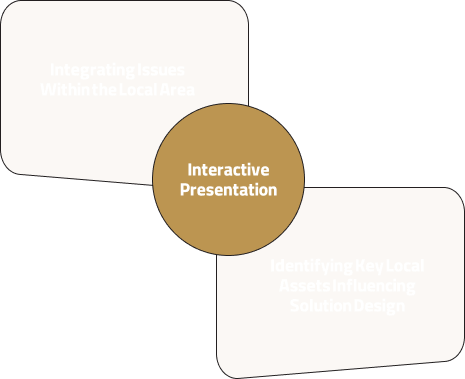
Cultural maps highlighting natural, social, economic, and physical assets
Documented records of local challenges, resources, and community capacities
Identification and classification of local challenges
Analysis of the relationships between issues, community capacities, and local characteristics
Developing locally grounded and participatory solutions
Designing actionable projects to address challenges and leverage existing capacities
Enhancing citizens’ sense of belonging and connection to their neighborhoods and cities
Raising social awareness of local assets, opportunities, and the value of community participation
Developing participatory and innovative planning models
Strengthening social networks and collective decision-making processes to support sustainable development




Asia:Muscat, Oman
North America:University Street, Burnaby, Canada
North America: +1 (604) 906 1992
Europe:Jaime Cortesao Street, Aveiro, Portugal
Europe: +351 920 383 469